
Dashain is not only a holiday, it is the heart of Nepal. As the longest and most important festival in the country, it affects millions of people. It connects old stories, family togetherness, and colorful traditions. Showing the win of good over bad, Dashain turns the whole nation into a place full of color, prayers, and joy.
With history going back many centuries, Dashain comes from Hindu stories about the goddess Durga winning against the demon Mahishasura. But besides these stories, it also works as an important connection for society. It brings families together from all over the world to remember where they come from. Whether you are a local person going back to your village or someone from the Nepali community living in another country, Dashain stays as a deep reminder of who you are and where you belong.
During the Dashain festival, you can enjoy watching many colorful kites fly in the sky, which is a fun and happy tradition.
The 15 Days of Dashain: A Journey of Rituals
Unlike many festivals that span a single day or weekend, Dashain unfolds over 15 days, each with its own distinct significance. The timing varies annually based on the lunar calendar, typically falling in late September or early October. Dates should be verified closer to the event.
Key Ceremonies You Should Know
- Ghatasthapana (Day 1): The festival begins with the planting of Kalash (sacred pots) and the sowing of barley seeds (jamara). This marks the start of the spiritual journey.
- Fulpati (Day 7): Fresh flowers, leaves, and sugarcane are brought from Gorkha to the Durbar Square in Kathmandu, symbolizing the arrival of divine power.
- Maha Asthami (Day 8): A day of intense worship, often involving animal sacrifices at temples to honor the fierce form of Goddess Kali.
- Maha Navami (Day 9): Dedicated to the vehicle of the gods, this day sees the worship of vehicles and tools, blessing them for the coming year.
- Vijaya Dashami (Day 10): The climax of the festival. Elders apply Tika (a mixture of red powder, yogurt, and rice) and bless the younger generation. This is the day families reunite, and the jamara (golden barley grass) is distributed.
- Kojagrat Purnima (Day 15): The festival concludes on the full moon night, where people stay awake all night, believing the goddess Lakshmi descends to drink milk offered to her.
The Heart of Dashain: Tika, Jamara, and Ping
While the 15-day structure provides the framework, the soul of Dashain lies in its specific traditions. These are not merely routine activities; they are deeply symbolic acts of connection.
The Power of Tika
The most anticipated moment for many is receiving the Tika. In a hierarchical yet loving display, elders place the red and yellow mixture on the foreheads of juniors, accompanied by blessings for health, wealth, and longevity. This act reinforces the family hierarchy while celebrating the bond of love. It is a moment where generations pause, look into each other’s eyes, and reaffirm their commitment to one another.
Growing Jamara
Before Tika, families spend days nurturing Jamara (sacred barley grass) in a dark room. By the tenth day, the grass turns a golden-yellow hue. Receiving Jamara from elders is considered a blessing of prosperity. The contrast between the dark room and the golden grass symbolizes the emergence of light and hope.
The Joy of the Ping
No Dashain is complete without the Ping, tall bamboo swings erected in courtyards and open fields. Constructed with local bamboo and ropes, these swings allow people to “touch the sky,” a metaphorical gesture of leaving behind worldly troubles. The sound of laughter echoing from the Pings is the soundtrack of the festival, uniting children and adults alike in playful joy.
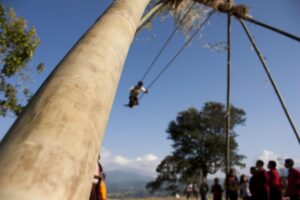
Image by Suman from Pixabase: A traditional bamboo Ping swing during Dashain.
Feasting on Tradition: The Flavors of Home
Dashain is a culinary celebration. The air is filled with the aroma of spices as families prepare feasts that have been passed down through generations.
- Sel Roti: A sweet, ring-shaped rice doughnut, crispy on the outside and soft inside. It is the classic Dashain snack.
- Mutton Curry: Often reserved for special occasions, the rich, spicy mutton curry is a centerpiece of the Dashain feast.
- Kheer: A creamy rice pudding flavored with cardamom and nuts, served as a dessert to sweeten the end of the meal.
- Yogurt and Pickles: Essential accompaniments that balance the richness of the meat dishes.
These dishes do more than satisfy hunger; they trigger a powerful sense of nostalgia, connecting people to their childhood and their homeland.
Dashain’s Impact on Nepal’s Economy and Society
Dashain is a massive economic engine for Nepal. The festival season drives a surge in demand for clothing, jewelry, electronics, and food. Local markets buzz with activity, and small businesses often see their highest revenue of the year during this period.
The Great Migration
Perhaps the most visible social impact is the mass migration from cities to rural villages. Millions of urban dwellers leave Kathmandu and other cities to return to their ancestral homes. While this strengthens family bonds, it also presents logistical challenges:
- Traffic Congestion: Roads leading out of cities become gridlocked.
- Transport Strain: Public buses and flights are booked weeks in advance.
- Urban Quiet: Cities temporarily empty out, creating a unique silence in usually bustling areas.
Efforts are underway to improve transportation infrastructure and urban planning to manage this annual exodus more smoothly, ensuring that the celebration remains joyful rather than stressful.
Dashain Goes Global: Celebrating Abroad
The spirit of Dashain knows no borders. Significant Nepali communities in the United States, Australia, the UK, and the Middle East celebrate with the same enthusiasm as those in Nepal.
- Community Gatherings: Embassies and cultural associations host large events featuring traditional dances, music, and food.
- Virtual Connections: Technology has bridged the gap. Families use video calls to participate in Tika ceremonies remotely, allowing elders to bless grandchildren thousands of miles away.
- Cultural Exchange: These global celebrations serve as a window for non-Nepalis to learn about the country’s rich heritage, fostering cross-cultural understanding.
The Future of Dashain with a Digital Evolution
As Nepal modernizes, so too does Dashain. Social media has transformed how the festival is experienced. Platforms like Facebook, Instagram, and TikTok are filled with:
- Live streams of temple ceremonies.
- Storytelling about family traditions.
- Virtual Tika sessions for the diaspora.
This digital evolution ensures that Dashain remains relevant for younger generations while preserving its core spiritual essence.
Frequently Asked Questions About Dashain
When is Dashain 2026?
Dashain follows the lunar calendar. While exact dates vary, Vijaya Dashami (the main day) in 2026 it will start on October 11th, with the main Tika day on October 21st.
What is the significance of Tika?
Tika is a blessing from elders. It consists of red vermillion powder (abir), yogurt, and rice. It symbolizes the removal of obstacles, the granting of good fortune, and the strengthening of family bonds.
Can non-Hindus celebrate Dashain?
Yes! Dashain is a national festival in Nepal. People of all faiths participate in the cultural aspects, such as visiting family, enjoying the food, and swinging on the Pings.
What foods are essential for Dashain?
While menus vary by region, Sel Roti, Mutton Curry, and Kheer are the most iconic dishes. Vegetarian options like Aloo Tama (bamboo shoot curry) are also popular.
How is Dashain celebrated differently in the diaspora?
Abroad, the focus often shifts to community gatherings and virtual family reunions. While large-scale animal sacrifices are less common due to legal restrictions, the spiritual and familial core remains intact.
Conclusion
Dashain is a testament to the enduring power of tradition in a rapidly changing world. From the sacred planting of jamara to the soaring heights of the ping, every ritual tells a story of resilience, faith, and love. As Nepal moves forward, embracing sustainability and technology, the festival adapts without losing its soul.